

PROJECT OVERVIEW
George Leslie is the primary delivery partner for Scottish Water on the Loch Katrine peatland restoration initiative. Their role encompasses on-ground peatland interventions, along with related infrastructure and aqueduct works within the same catchment.
EXECUTIVE SUMMARY
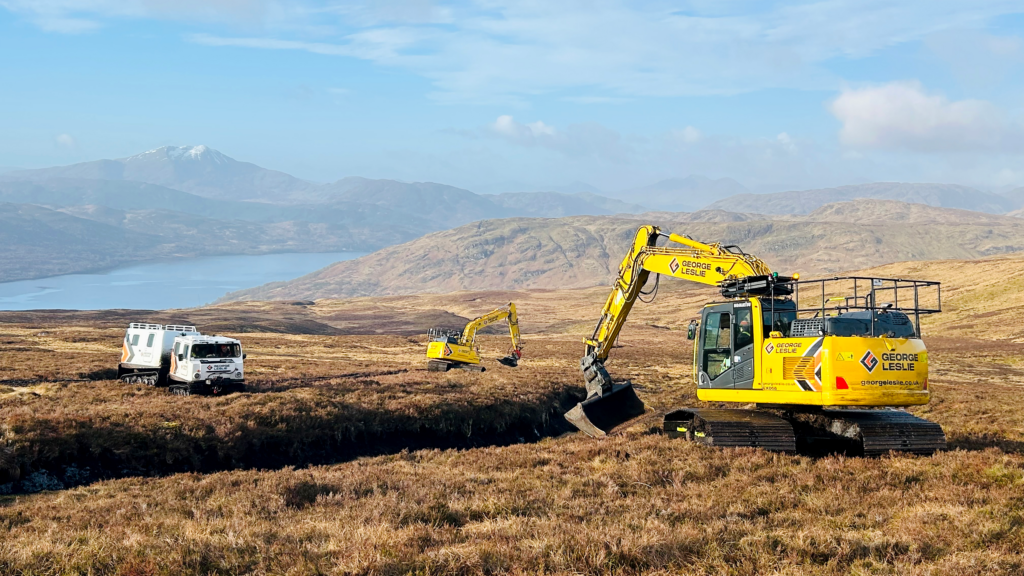
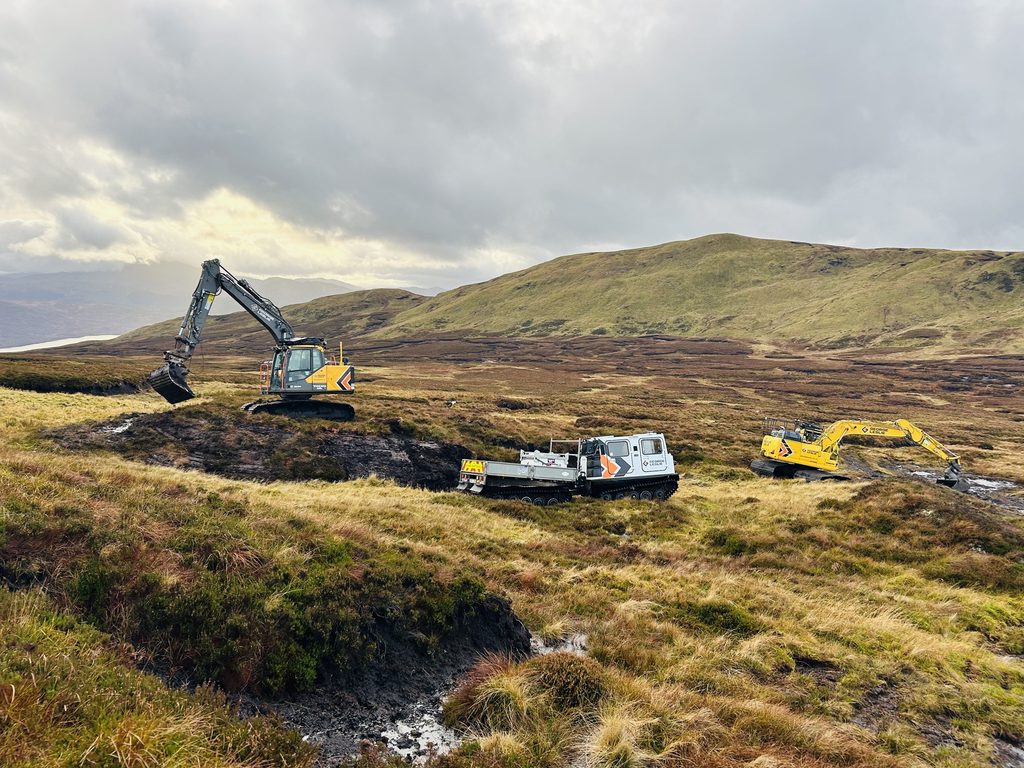
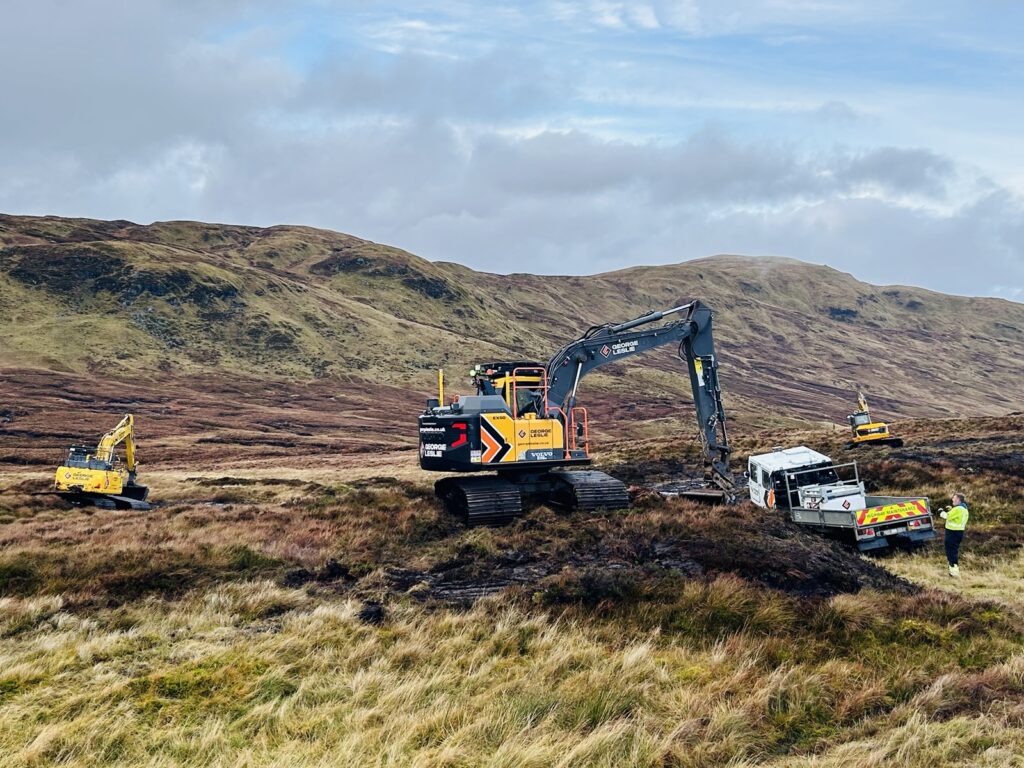
From January 2025, George Leslie has led the restoration of over 50 hectares in the first phase of a 400-hectare peatland rehabilitation project around Loch Katrine. Operations include ditch blocking and peat hag reprofiling to restore hydrology, improve water quality for over a million Glasgow-area consumers, and increase carbon sequestration—contributing to Scottish Water’s net-zero objectives.
PROJECT BACKGROUND
- Loch Katrine supplies raw water to approximately 1.3 million people in Greater Glasgow via a historic aqueduct system built in the Victorian era.
- Degraded peatlands—exposed by historic drainage for grazing and deer activity—were eroding and increasing organic loading in the loch.
- Funded under Scotland’s Peatland ACTION programme and supported by Forestry and Land Scotland, this initiative aligns peatland and woodland restoration with catchment-wide water management.
PROJECT TIMELINE
- January 2025: Phase 1 begins—peatland restoration by George Leslie.
- April–June 2025: Over 50 hectares restored.
- November – March 2026: Over 85 hectares restored
- April 2025: Structural repairs engagement launched; aqueduct refurbishment planned.
- October 2025 onward: Seasonal continuation across catchment toward 400 hectares over the next decade.
GOALS AND OBJECTIVES
- Water Quality Protection: Reduce organic peat runoff, easing treatment requirements.
- Carbon Sequestration: Rewetting peat to switch from carbon emitter to sink, feeding Scottish Water’s net-zero 2040 target.
- Ecosystem Restoration: Stabilise peatlands, improve biodiversity, integrate reforestation with natural regeneration.
CHALLENGES OVERCOME
- Hydrological Restoration: Ditch blocking and peat hag reprofiling reversed decades of drainage infrastructure damage.
- Ecological Sensitivity: Work carefully paused during bird nesting season to preserve habitats.
- Integrated Landscape Management: Coordinated with Forestry and Land Scotland, Scottish Water, and Peatland ACTION to align restoration with woodland projects.
ENVIRONMENTAL BENEFITS
- Water Purification: Peatland acts as a natural filter, reducing spikes in organic matter during heavy rainfall.
- Carbon Capture: Restored peatlands and adjacent woodlands expected to trap 1 million tonnes of carbon over 60 years, boosting biodiversity by 40%.
- Resilience to Climate Change: Enhances soil stability and water retention in catchment.


EFFICIENCY BENEFITS OF THE PROJECT
- Operational Savings: Decreased organic load eases treatment processes, saving energy and chemicals.
- Monitoring and Evidence: Data collection by University of Stirling and Scottish Water validates improvements in water quality and carbon flux post-restoration.
COMMERCIAL IMPLICATIONS
- Contractor Partnership: George Leslie’s multi-year contract, extended through 2027, reflects trust in delivering large-scale environmental engineering solutions.
- Funding & Scale: Backed by Scottish Government’s £250 million Peatland ACTION fund, enabling rollout across 400 ha of catchment land.
- Cross-sector Integration: Coordination between public (Scottish Water), forestry management (FLS), and environmental bodies ensures scale and coherence, enhancing project impact and commercial viability.
CONCLUSION
George Leslie’s focused engineering efforts at Loch Katrine have spearheaded a pioneering peatland restoration programme with wide-reaching environmental, operational, and commercial benefits. By leading on hydrological rehabilitation and integrated catchment management, we are playing a crucial role in delivering improved water quality, strengthened ecosystem resilience, and significant progress toward Scotland’s climate and net-zero commitments.