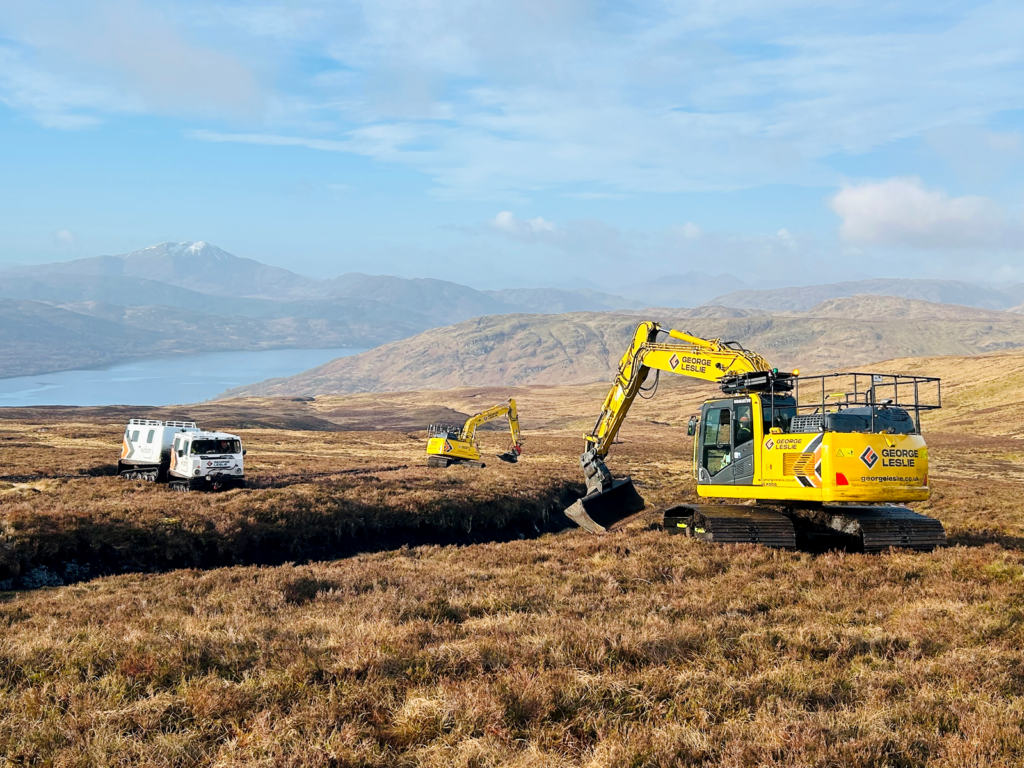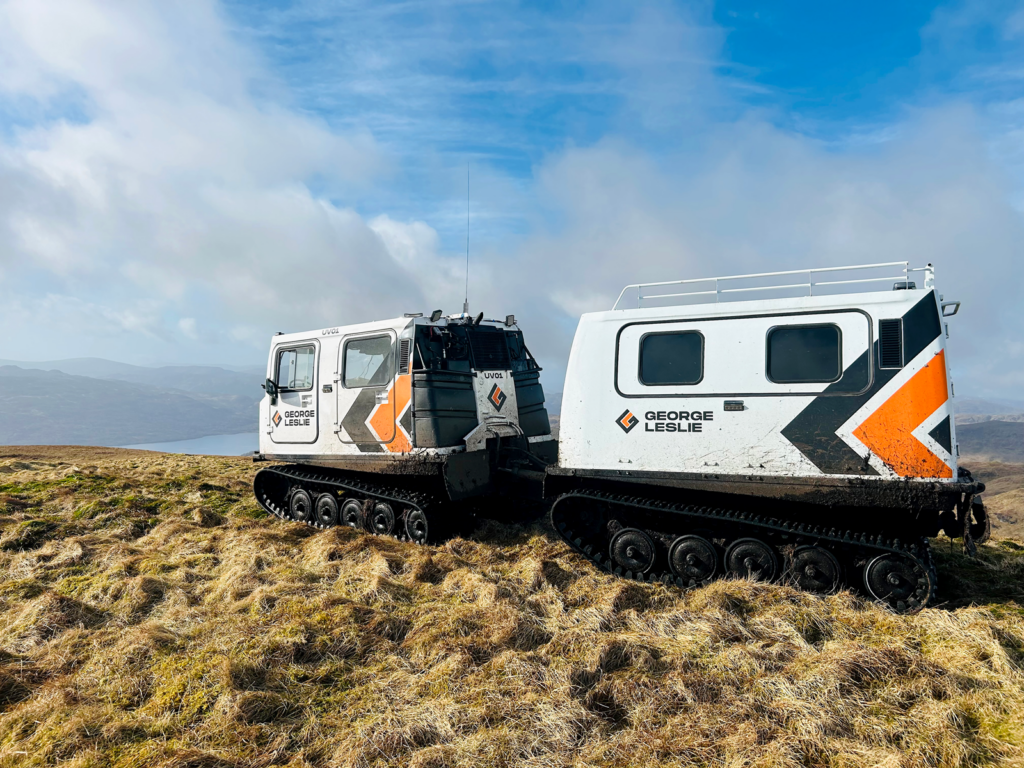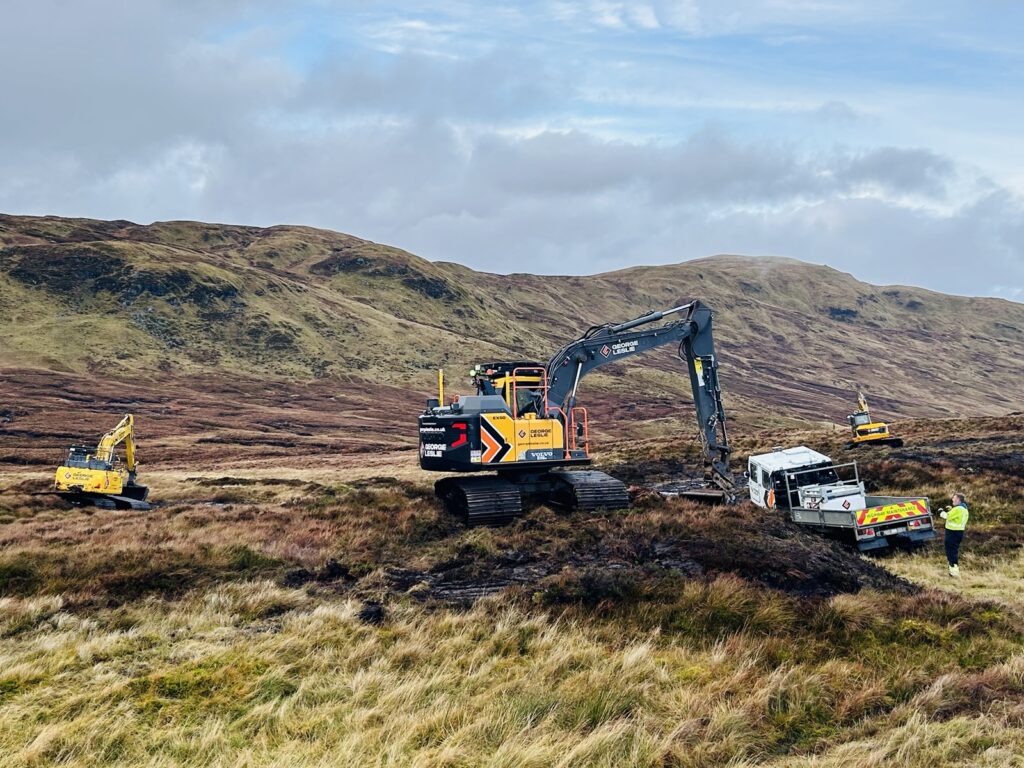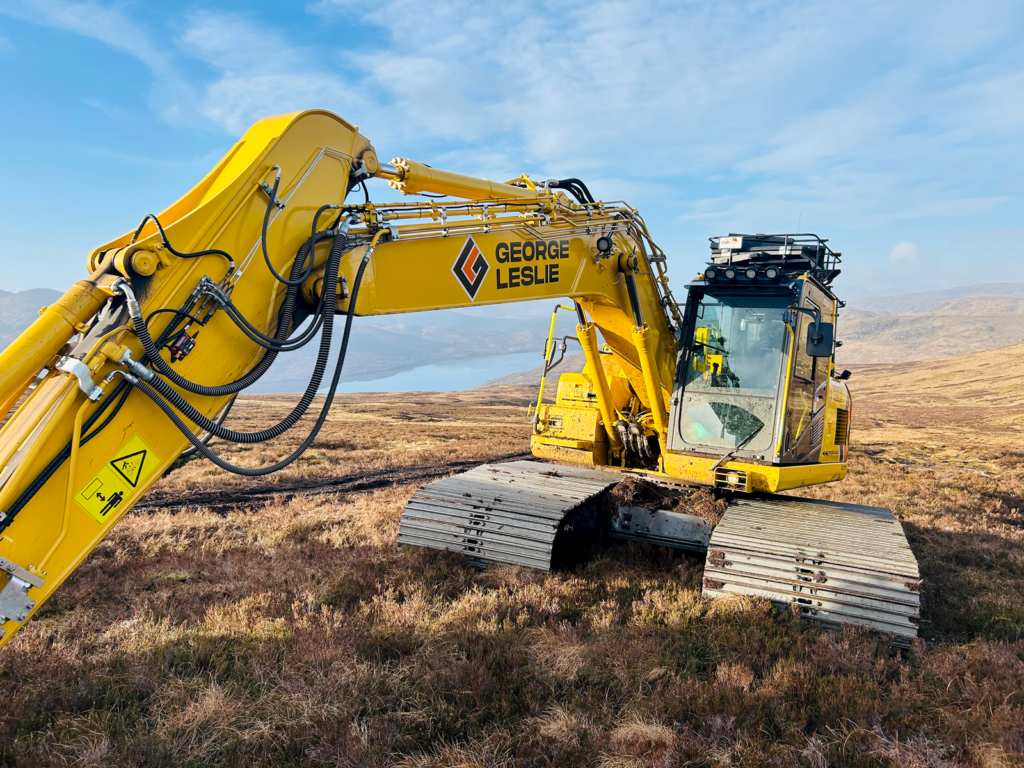

George Leslie is delivering a major restoration project at Loch Katrine, playing a key role in Scotland’s efforts to tackle climate change and restore biodiversity.
The project is restoring degraded peatland within the Loch Katrine catchment – a landscape that plays a critical role in supplying drinking water to more than 1.3 million people across Greater Glasgow and Central Scotland.
Work started in January 2025 following mobilisation in December 2024. Delivery is supported by environmental specialists and local stakeholders including Forestry and Land Scotland, the Woodland Trust, and Sir Walter Scott Steamship. Work is carefully timed out-with nesting season to avoid disturbance to protected species such as golden eagles and grouse.
The Peatland Restoration initiative was developed in response to the growing challenges of climate change and biodiversity loss. Years of erosion, primarily caused by the red deer population in the area, and drainage, left large areas of peatland dry, unstable and no longer functioning as an effective carbon store.
Now, signs of recovery are already evident from the return of amphibians, invertebrates, and more diverse vegetation. The area, which was once firm, drained and sparsely vegetated are now soft, waterlogged, supporting a wider range of plant and animal life.
Commenting on the success of the project so far, Site Agent Craig MacDonald said: “The biggest success, aside from upskilling the plant operators in their ability to undertake and understand the restoration works would be the amount of extra hectares we have managed to complete on site.
The original scope of the project was to restore around 161 hectares of eroded peatland. To date, 226 hectares of degraded peatland have been restored, with a further 86 hectares due this season.”
On site, works include blocking historic drainage channels, reshaping exposed peat and using specialist techniques such as zippering and peat dam construction to restore the land’s natural water balance.
Research by the University of Stirling supports the project through ongoing monitoring of carbon storage and ecosystem recovery. Equipment such as dip wells, a V‑notch weir, a weather station and other various sensors are tracking groundwater, outflow and environmental change over time.
Advanced mapping and survey technology is also being used to support the restoration programme. Using GNSS (Global Navigation Satellite System) surveying, GIS mapping and QField mobile software, site teams can accurately identify restoration areas, record completed works and monitor landscape change over time. This technology allows operators to navigate to remote locations, capture survey data with high precision and maintain up-to-date digital records of peatland recovery across the catchment.
Indicative national comparisons suggest restoring around two hectares of peatland could prevent emissions equivalent to taking roughly a dozen petrol cars off the road each year. With work expected to be complete in December 2026 for Scottish Water, the Loch Katrine Peatland Restoration project is expected to deliver lasting environmental benefits for decades to come.