

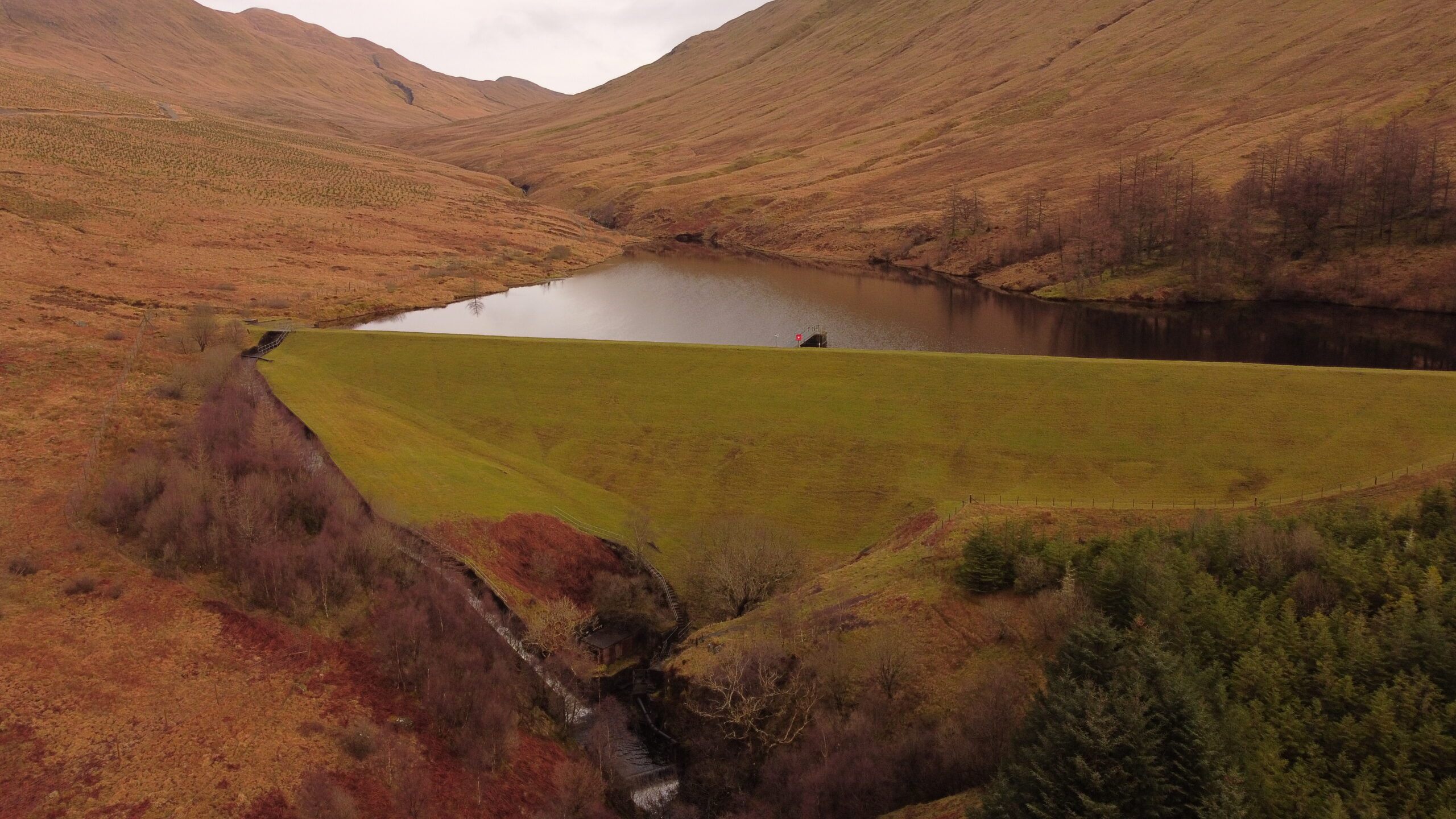
George Leslie has completed specialist investigation works at Auchengaich Reservoir to examine reduced flows reaching Belmore Water Treatment Works.
The project centred on the use of an innovative survey technology capable of travelling through operational pipelines while collecting detailed information about their condition.
The survey utilised Acquarius, an intelligent swab developed by Dutch company Acquaint. The device travels through pipelines, gathering data on pipe alignment, structural integrity, air pockets, debris and other anomalies, while also providing information on the route and depth of buried assets.
The technology is understood to represent the first use of the system in the UK. The findings will provide Scottish Water with detailed information on the condition of the pipeline, helping to inform future maintenance, improvement and resilience planning.
Before the survey could take place, engineering works were required to modify sections of the existing pipeline and create suitable insertion and recovery points for the swab. These alterations allowed the survey equipment to enter and exit the live pipeline while maintaining water supplies throughout the works.
Good relationships with neighbours are important on any project, but perhaps especially so in this location. Access to sections of the pipeline route required close coordination with the Ministry of Defence, as part of the asset passes through an active military firing range.
Commenting on the project, Site Agent Carl Tidy said:
“This project allowed us to investigate reduced flows using innovative survey technology and the data gathered will help Scottish Water make informed decisions about the future management of the asset.
The team also worked closely with the Ministry of Defence to coordinate access through restricted areas along the pipeline route. Through careful planning and collaboration, the works were successfully delivered.”
The remote location and challenging terrain added further complexity, with sections of the pipeline passing through a steep gorge below the reservoir spillway. Temporary scaffold structures were installed to provide safe access for inspection and construction activities.
A crane platform was also constructed to support a 100-tonne crane operating at near maximum reach for lifting operations within the gorge.
The project team carried out pipework modifications to ensure the device could travel through the full length of the asset and safely collect debris generated during the inspection.
The survey has now been completed and the results submitted to Scottish Water for assessment. As the first known use of the technology in the UK, the project has provided valuable insight into the condition of the pipeline and will help inform future decisions on the management of this critical asset.