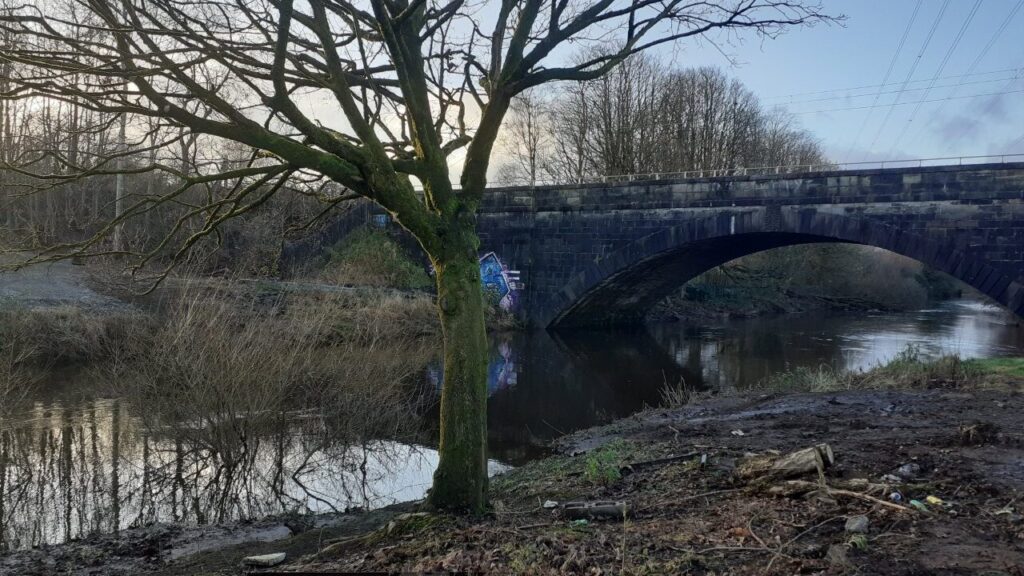

George Leslie has successfully removed a redundant water pipe bridge over White Cart Water in Paisley following months of planning and environmental assessments.
The structure, which was identified by Scottish Water as one that needed to be removed, had been out of operational use for some time and was gradually deteriorating. Leaving the bridge in place posed risk of eventual collapse.
In comparison to other projects, this one might have seemed relatively straightforward. However, the site team faced a series of unexpected hurdles – namely challenges with the surrounding natural habitat.

The initial plan was to construct a crane pad and lift the redundant pipe bridge out by crane, but operating so close to the Blackhall Railway Viaduct meant we would have had to prove it was fail‑safe in the event of a collapse. During the Pre-Construction phase, the crane and its impact area was examined, and in the worst‑case scenario the crane’s reach could have impacted the railway. As a result, the plan was revised to use a large excavator instead. While doing so required 400 tonnes of stone to support its access route, it minimised interface with Network Rail.
Senior Site Agent Andy MacLeod explained: “The temporary access road needed to be solid for the size of machine we were bringing in. Normally in this kind of situation, you’d want to excavate the ground, take the soil away and put the stone down onto that.
We didn’t do that because there was invasive non-native species present – Himalayan balsam and giant hogweed.”
Spreading non-native invasive plant species is a prosecutable offence. The giant hogweed, which in places had grown nearly three metres high, posed a serious safety hazard due to its phototoxic sap. Contact with skin and exposure to sunlight causes painful blisters and severe skin irritation. Our subcontractor, Invasive Weeds Agency (IWA), had to spray the giant hogweed several times just so staff could walk on site.
A nearby badger sett added another layer of complication. Wildlife cameras were installed by JK Ecology for a couple of weeks to monitor signs of activity. When no movement was detected, they confirmed it was inactive and closed it off. Because it lay within 30 metres of the site, it would have required the team to work under specific conditions and obtain a licence from NatureScot.
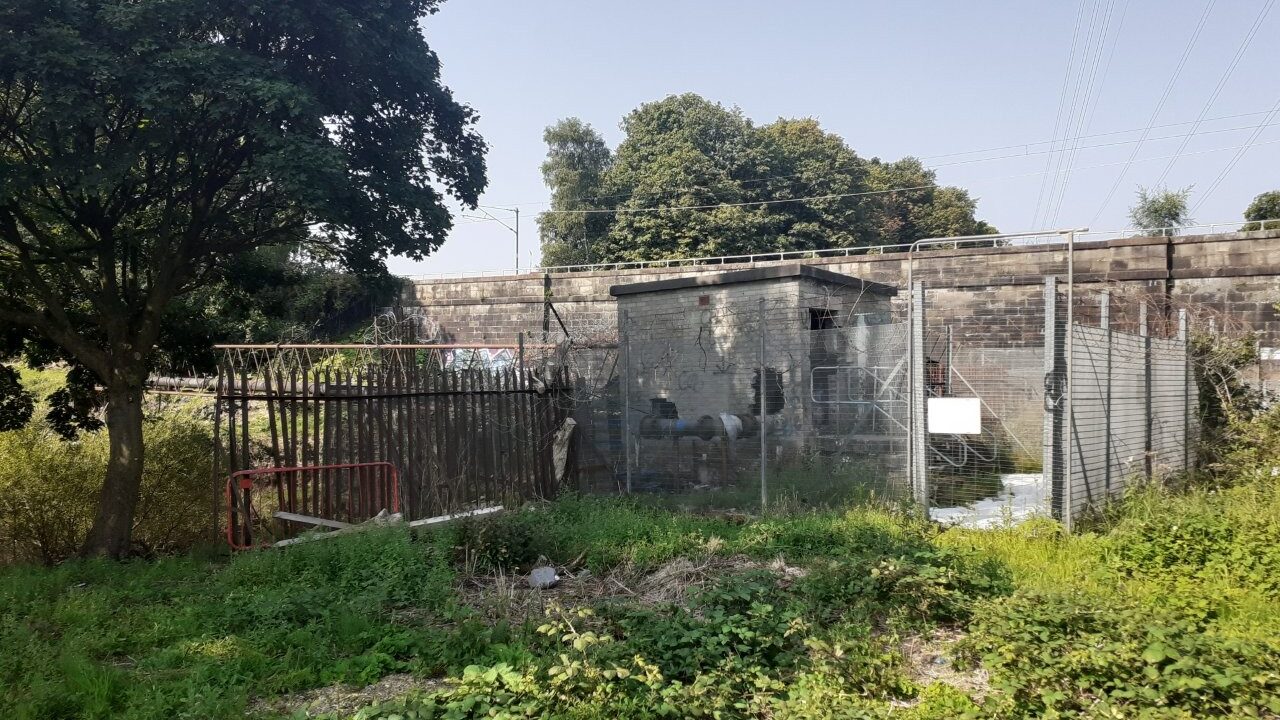
Following bat surveys in June, the small valve building beside the pipe bridge was identified as a potential roost. The cavities in the building could support bats, so a licensed ecologist was brought in to inspect it using an endoscope camera. No roosting activity was found, allowing the project to continue. The building was demolished in a controlled fashion by our subcontractor Caskie Demolition, overseen by our bat specialist from JK Ecology.
The pipe coating was another challenge as it was identified that it contained asbestos material. This created a knock-on requirement for a temporary working platform, which in turn meant a structural assessment was needed to confirm the bridge steelwork could safely support the access platform.
Our subcontractor, Investigo, carried out this assessment via rope access, climbing across the bridge to complete the survey, and provided a Structural Engineer’s Report. The temporary working platform and successfully installed, inspected, and removed by Peoples Safety.
The coating needed to be stripped off first before the pipe could be removed. If the bridge was lifted as it was, there would have been a risk of losing that coating material into the river.
Commenting on the success of the project, Operations Director, Tony Fry said: “This project is a great example of how diligence and teamwork go hand in hand.
The team worked through a series of environmental and operational challenges with professionalism, ensuring the job was delivered safely and responsibly.”
With the pipe bridge now removed and the site reinstated, this project demonstrates how a seemingly simple job can prove to be far more complex when ecology, and other environmental constraints come into play.