
PROJECT OVERVIEW
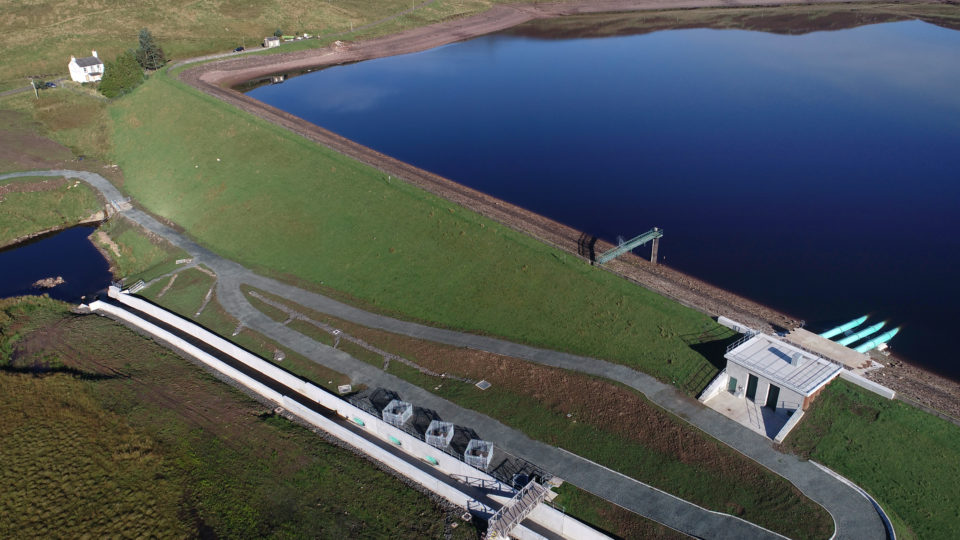
The Craigmaddie Reservoir project comprised a series of interconnected infrastructure and environmental improvement works delivered by George Leslie on behalf of Scottish Water. Completed in September 2024 at a total value of £4.7 million, the project focused on restoring and future‑proofing a historic 19th‑century water asset while enhancing public access, biodiversity, and environmental resilience.
EXECUTIVE SUMMARY
Craigmaddie Reservoir is a vital drinking water asset serving approximately 700,000 people and attracting over 160,000 visitors annually. The project successfully combined structural refurbishment, environmental protection, and public amenity improvements to extend the asset’s lifespan and improve its safety and sustainability. Innovation, low‑carbon construction techniques, and environmental stewardship were central to the project’s delivery, resulting in long‑term benefits for both the water network and the surrounding community.
PROJECT BACKGROUND
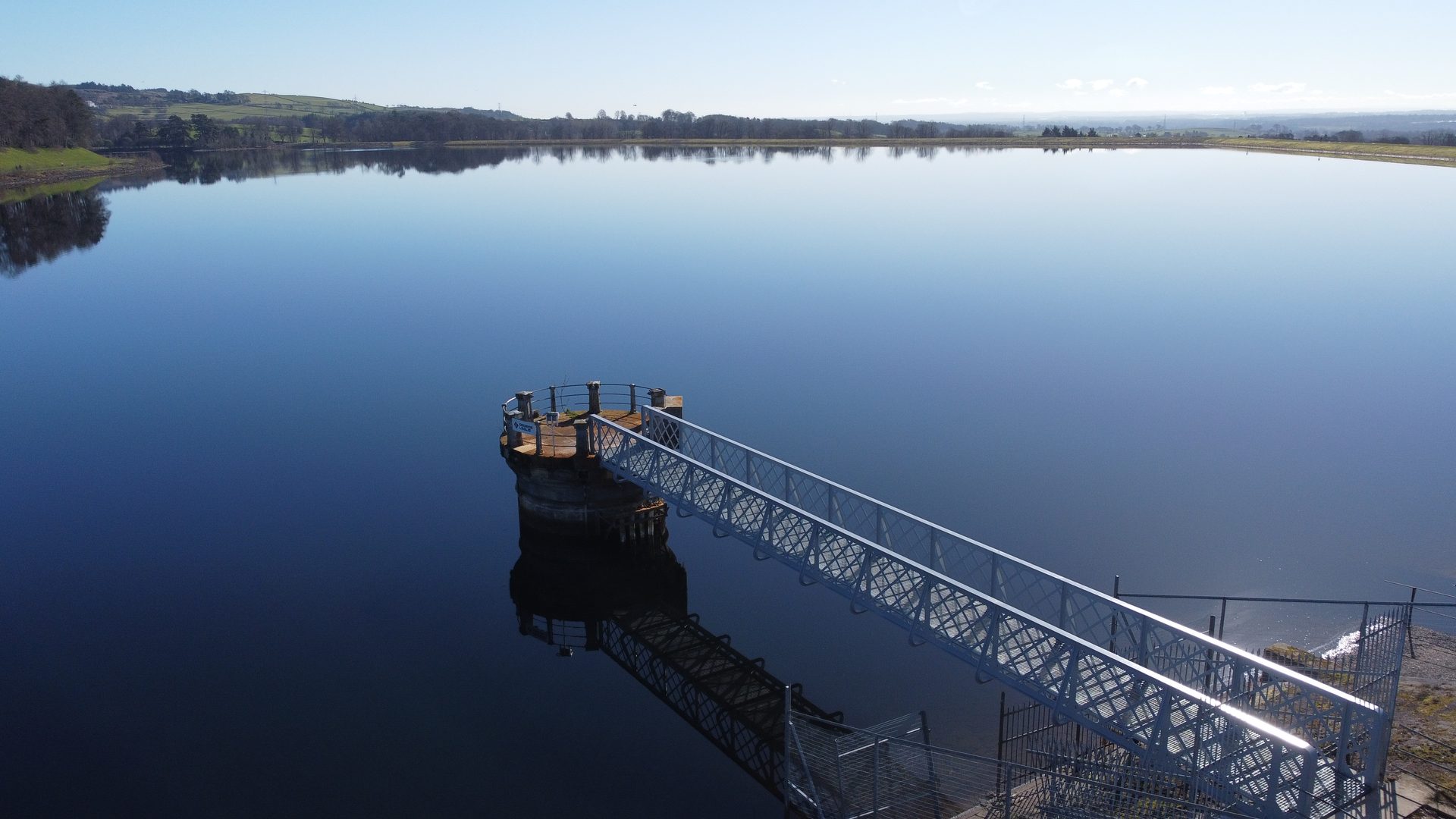
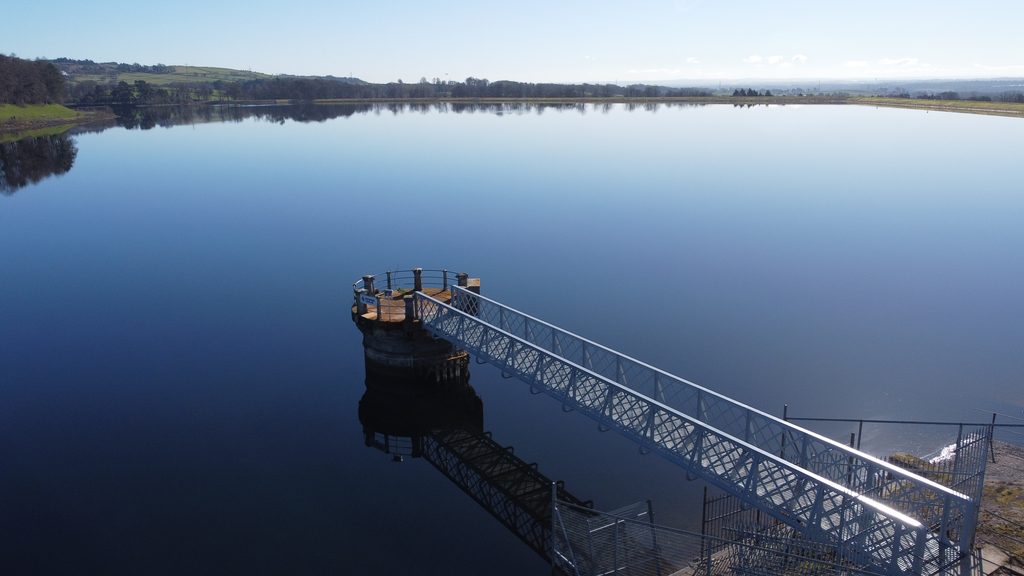
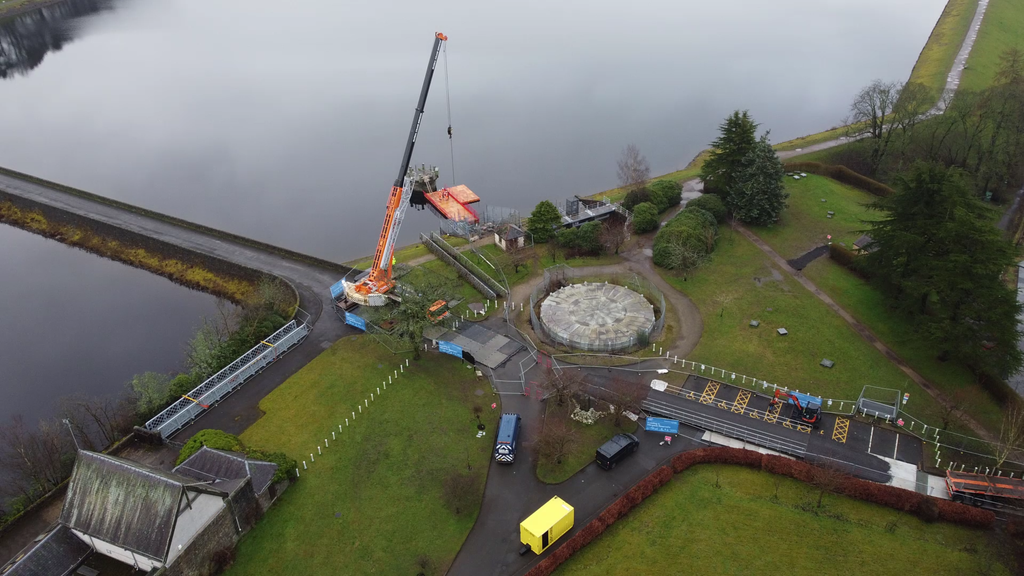
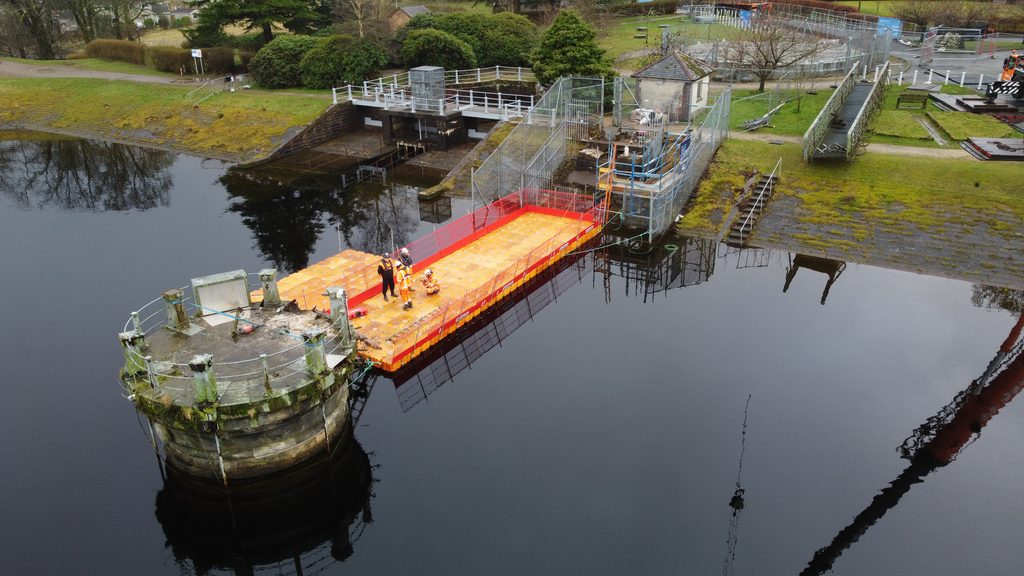
Constructed in the 19th century, Craigmaddie and Mugdock Reservoirs are historically significant but required major intervention to address aging infrastructure, environmental risk, and public safety concerns. Key drivers for the project included reducing the risk of pollution, maintaining water quality, restoring essential infrastructure such as the valve tower bridge and footpaths, and enhancing the site’s ecological and recreational value.
GOALS AND OBJECTIVES
- Safeguard drinking water quality and reduce environmental pollution risks
- Extend the design life of critical infrastructure by up to 100 years
- Improve public access, safety, and amenity at a popular visitor destination
- Minimise carbon emissions and site disruption through sustainable construction practices
- Enhance biodiversity and natural habitats within and around the reservoir
CHALLENGES OVERCOME
Working within a sensitive live water environment required meticulous planning to avoid impacts on water quality. Handling historic infrastructure demanded innovative “like‑for‑like” replacement techniques using modern, durable materials. Environmental constraints reinforced the importance of early collaboration with ecological specialists and careful sequencing of works. The project demonstrated how sustainability considerations at every stage—from plant selection to logistics—can significantly reduce carbon impact without compromising programme or quality.
EMBEDDED SUSTAINABILITY
Sustainability was embedded within the Craigmaddie Reservoir project from concept stage, forming a core decision‑making criterion alongside safety, cost, programme, and asset performance. Rather than retrofitting environmental measures, sustainability principles directly shaped the selected design solutions, ensuring long‑term value and resilience for a nationally important water asset.
INNOVATION
The project team undertook structured optioneering during the design phase, evaluating multiple materials, construction techniques, and methodologies against environmental impact and whole‑life performance. This process resulted in innovative yet practical solutions, including the like‑for‑like replacement of historic infrastructure using modern, durable materials, preserving heritage while delivering a projected 100‑year design life. This approach reduced future maintenance, material consumption, and associated carbon emissions.
CARBON AND EFFICIENCY
Design decisions were driven by whole‑life thinking rather than capital cost alone. The selection of robust, low‑maintenance materials and resilient construction solutions reduced future intervention requirements, delivering long‑term carbon savings. Early design development also enabled reduced site footprints, fewer vehicle movements, and more efficient construction sequencing, all contributing to lower embodied and operational carbon.
ENVIRONMENTAL ENHANCEMENT
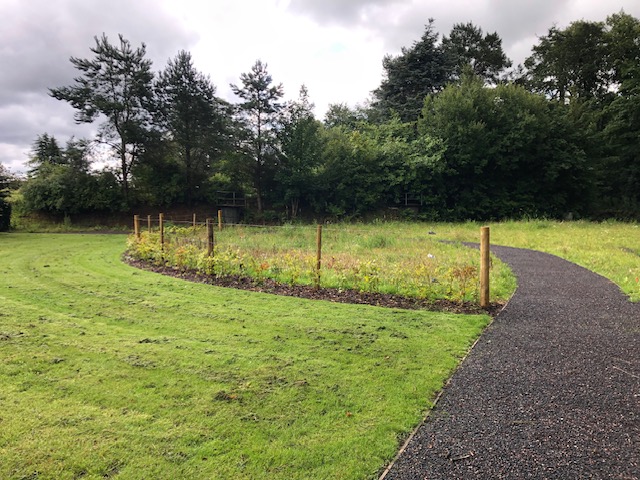
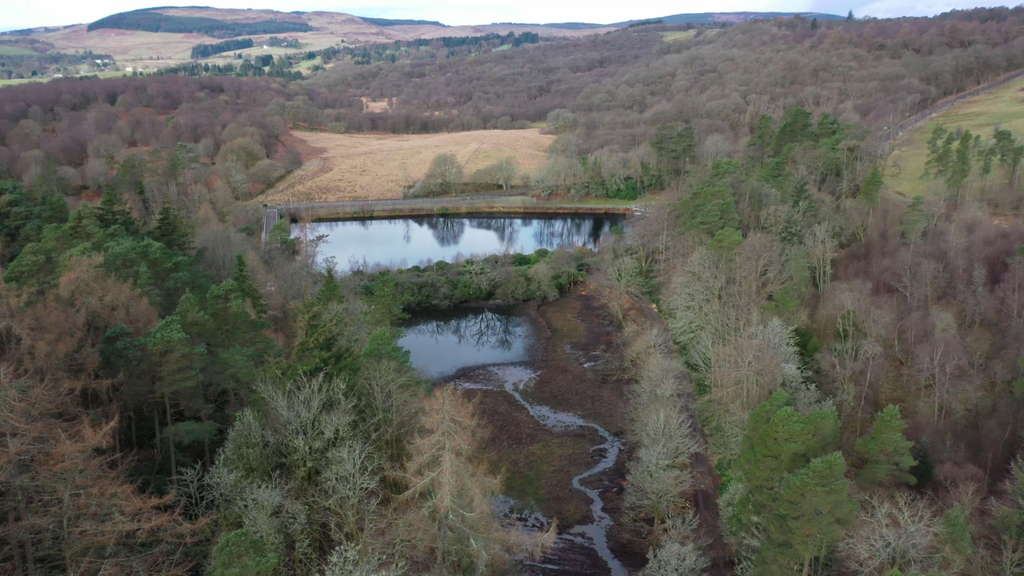
Early engagement with ecological specialists ensured environmental protection and enhancement were integral to the design, not an afterthought. The de‑silting of the Dirty Dam was carefully designed to maintain water quality while delivering significant habitat improvement and pollution risk reduction. Design‑led environmental enhancement culminated in the creation of a biodiversity garden, introducing over 4,000 native trees, shrubs, and plants to strengthen local ecosystems.
LOW IMPACT CONSTRUCTION
The design process prioritised constructability and minimised environmental disturbance. By designing solutions that reduced reliance on heavy plant, limited temporary works, and optimised site logistics, the project achieved tangible reductions in fuel use, emissions, and disruption within a sensitive live water and public environment.
LEARNING AND BEST PRACTICE
The Craigmaddie Reservoir project demonstrates how embedding sustainability at the design stage leads to improved outcomes across environmental performance, programme certainty, and long‑term asset value. The principles applied are fully transferable across future water infrastructure projects and provide a strong example of how sustainable design can be delivered pragmatically at scale.
- Removal of 7,000m³ of historic silt from the Dirty Dam, improving habitats and reducing downstream pollution risk
- Installation of sustainable materials and low‑impact construction methods
- Creation of a biodiversity garden with 4,032 trees, shrubs, and plants
- Protection and enhancement of local wildlife habitats alongside improved watercourse resilience
COMMUNITY ENGAGEMENT
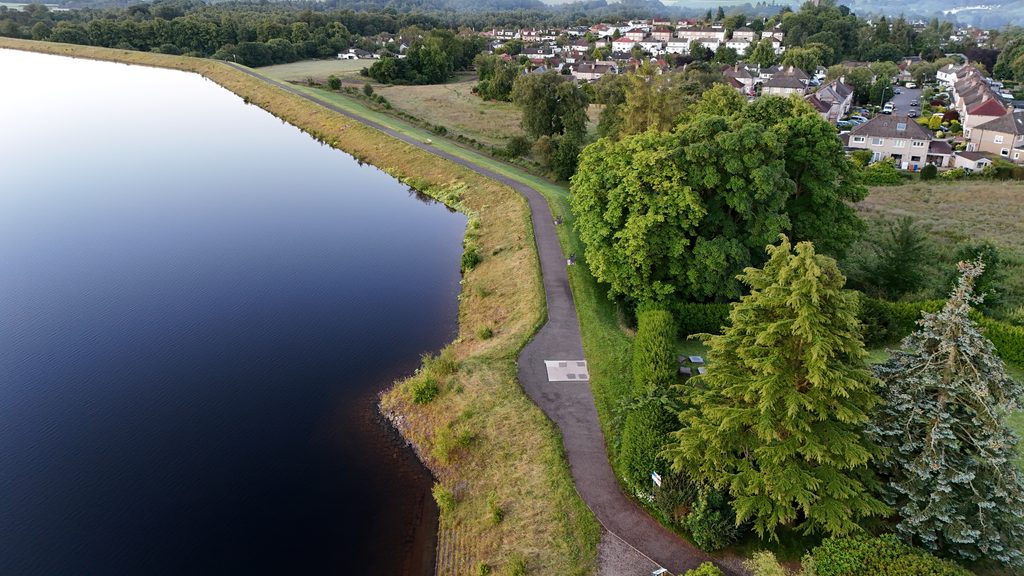
- Significant upgrades to footpaths improved accessibility and safety for the public.
- The biodiversity garden provides an attractive new amenity for visitors
- The works preserved a valued community asset while minimising disruption to visitors and local residents
- The project supports long‑term recreational use of a site enjoyed by hundreds of thousands each year
CONCLUSION
The Craigmaddie Reservoir project represents a successful example of how historic infrastructure can be modernised in a sustainable, community‑focused way. By integrating engineering excellence with environmental responsibility and public benefit, the project has secured the future of a critical water asset while enhancing its value for generations to come. The works demonstrate best practice in low‑carbon construction, environmental protection, and collaborative delivery.
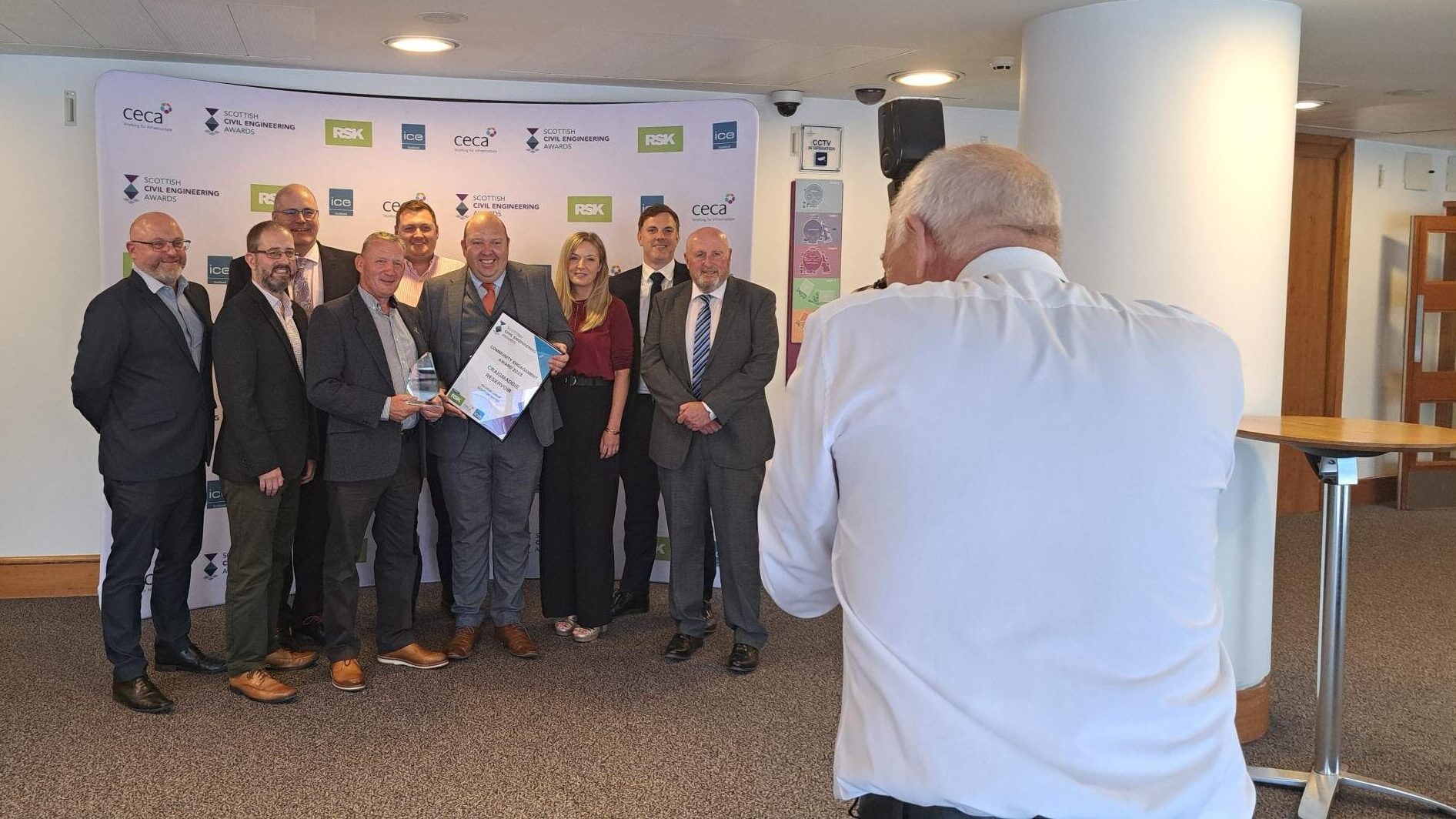
This project won CECA Scotland’s Project of the Year 2025 for Community Engagement