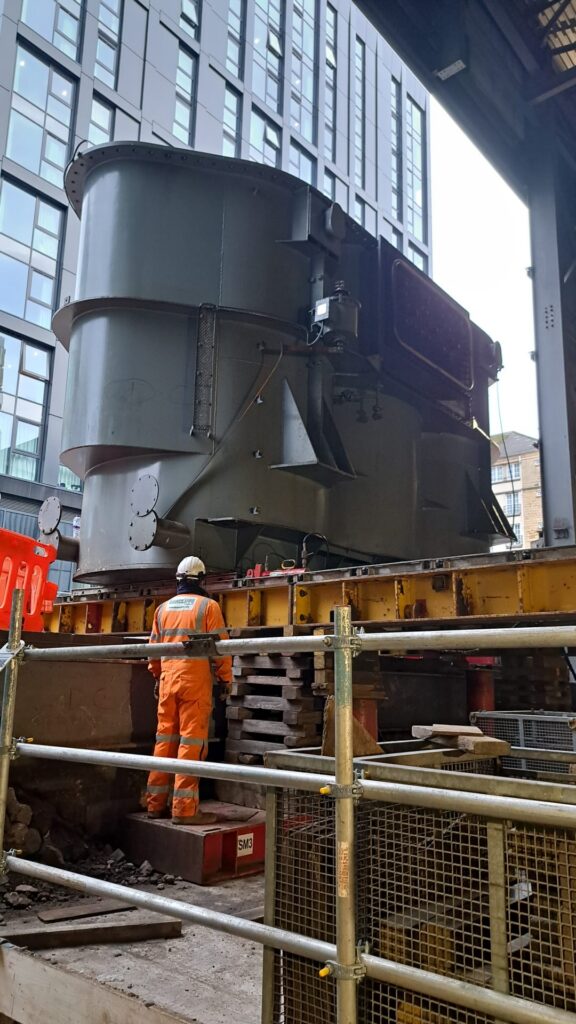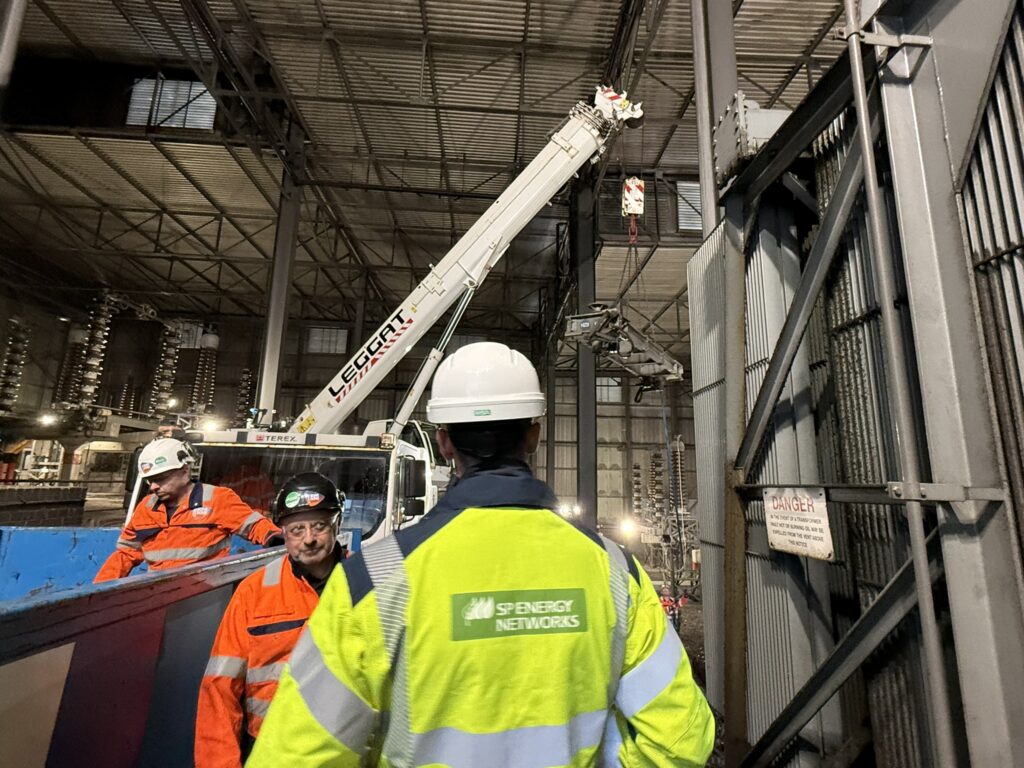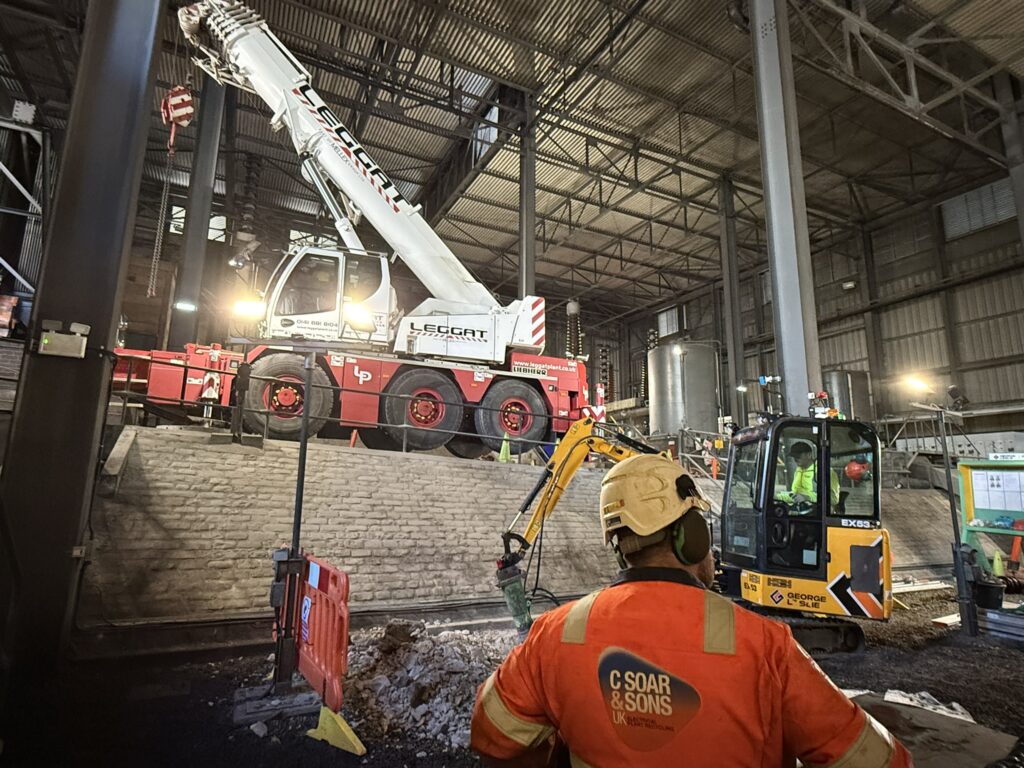

George Leslie successfully removed a 100-tonne 275kV transformer from Scottish Power’s West George Street 33/275kV Substation in Glasgow city centre.
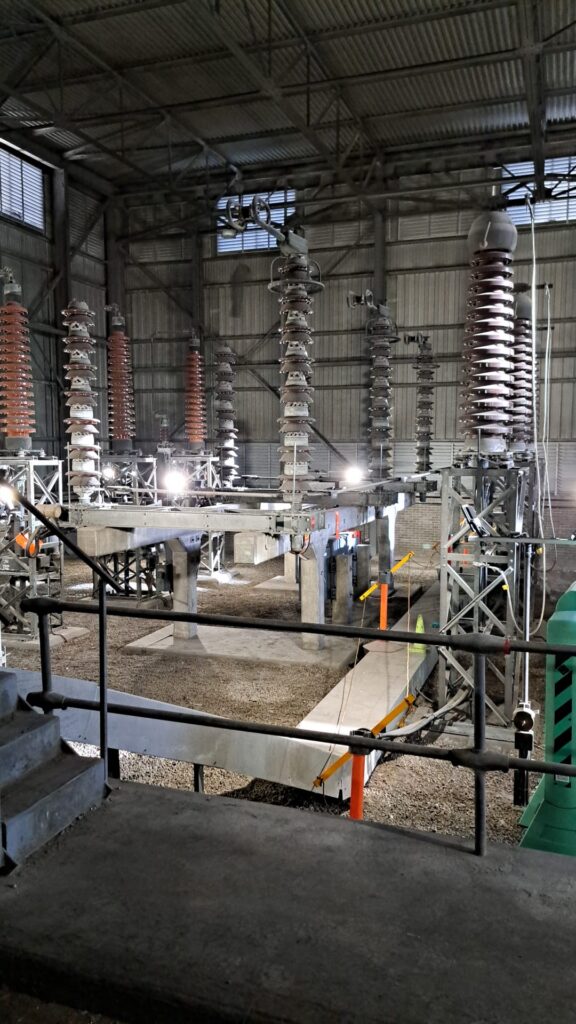
The works form part of Scottish Power’s wider programme to modernise critical energy assets and having been installed in the 1960s, it needed replaced. Typically, substations are contained outside, however, the West George Street transformer was housed inside an existing building.
The job started with George Leslie building a stone platform. With the road outside of the West George Street building sitting on an incline, this allowed engineers to level out the road. Half of the substation was then taken offline as part of a planned outage to allow engineers to carry out work safely. Due to the city centre location, the weight of the item, and it being inside a building, lifting it out by crane was not suitable.
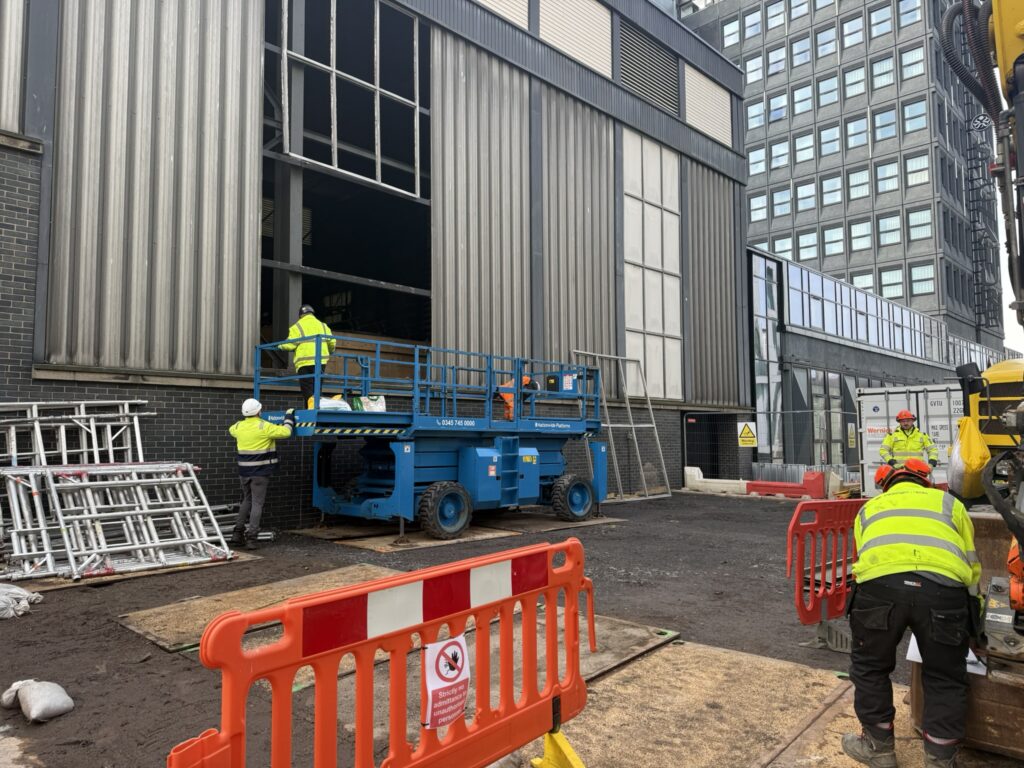
To make the transformer safe and manageable for extraction, demolition contractor, C Soar & Sons stripped it from its original ~160‑tonne weight, removing oil and redundant components. To then access the transformer, the façade of the building was carefully dismantled.
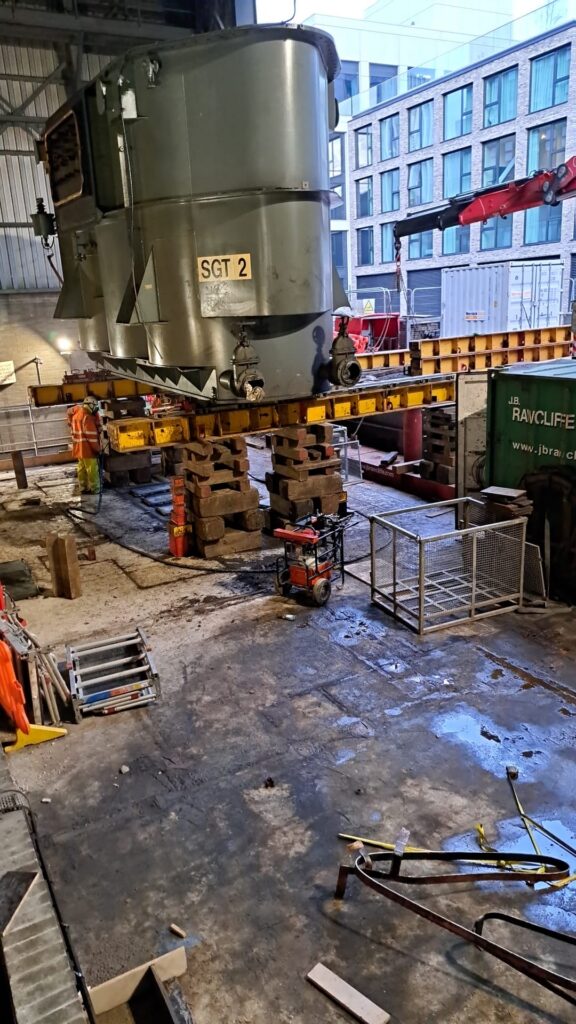
Working with specialist contractor Rawcliffe, the transformer could be removed from the building in a process called jacking and skidding. Once removed, it was transported to C Soar & Sons yard in England, for recycling. This method was a first for George Leslie. Site Agent David Bennett explained:
“The transformer was initially positioned on a reinforced concrete slab that sat below the level of the adjacent road and pavement on West George Street. To overcome the level difference, the transformer was progressively jacked, end by end, to a height of approximately 2 metres. It was then skidded along runway beams and then it was jacked up again to a certain height to allow the transport to come in and remove it.”
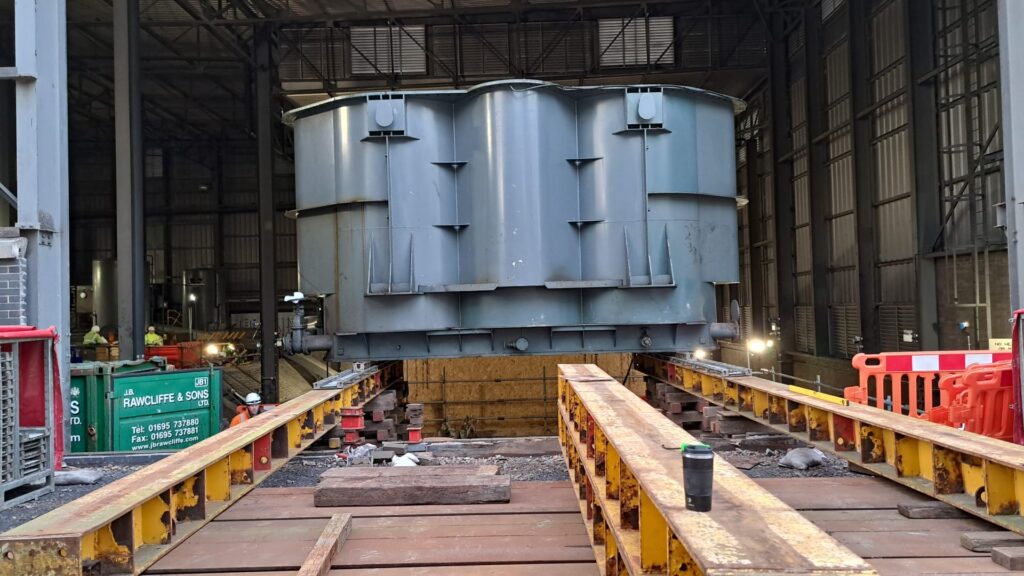
The use of laser scanning and a 4D detailed animation before work began proved to be helpful. It allowed the jacking and skidding methodology to be visualised and briefed out to all stakeholders and personnel working on-site.
The high‑profile location and live substation environment also created challenges. These included delays due to outage approvals, discovering dozens of uncharted cables within the 60‑year‑old structure, and managing logistics within constrained spaces.
Despite this, the team overcame challenges through early exploratory work, close collaboration with designers and subcontractors, and internal coordination. David added: “We did well to identify the various issues inside the substation, including the condition of the existing equipment and the many uncharted cables.
We began some of the exploratory work early because we suspected there was more on site than shown on the drawings. Starting early allowed us to gather the information needed to raise the required technical queries with the designers and work collaboratively with Scottish Power’s Senior Authorised Person and Engineers to resolve in a safe and timely manner.”
Reflecting on the success of the project thus far, Contracts Manager Jonathan Fulton said: “This was a complex project in a live, city-centre environment, and success came down to early planning, strong collaboration and a clear focus on safety from the outset.
The team demonstrated real ingenuity in adapting our approach to the constraints of the site and delivering Phase 1 efficiently.”
With Phase 1 complete, the new transformer installed by Rockliff was done using the platform and following a similar process to how the old one was removed but “in reverse.”
George Leslie will return for Phase 2 in Spring, and the work will involve rebuilding the façade, installing a new fire barrier wall, completing remaining civil works, and removing the temporary platform.